How to trade meme coins without becoming exit liquidity for speed traders
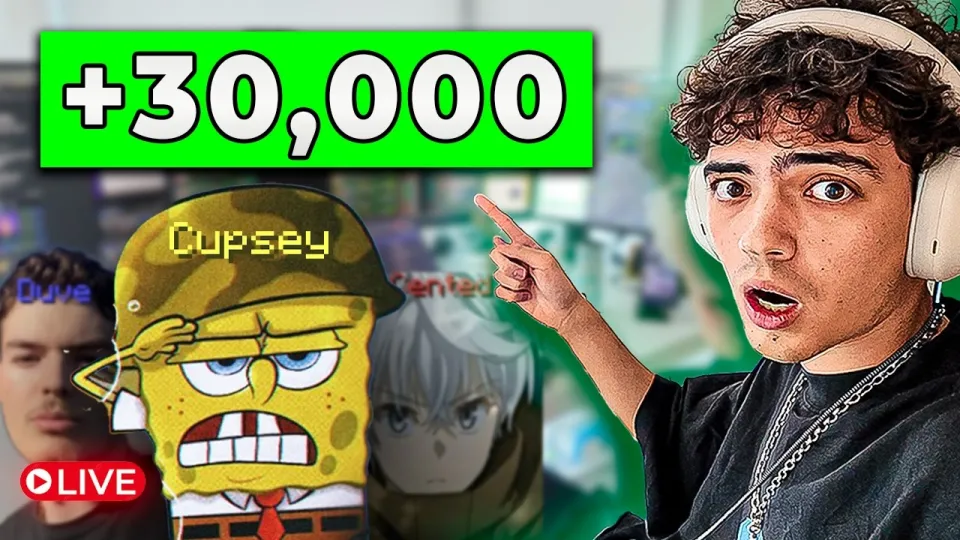
Video: I Traded With The World’s #1 Memecoin Trader
Need articles like this for your video? They help promote it on YouTube and Google — order them in the Telegram bot @sat_sit_bot. Articles with your video embedded are written and posted by the bot itself — on popular topical sites (no ads). Free trial — 50 articles.
· based on the channel Ethan Prosper
Meme coin trading is the practice of buying and selling tokens with no cash flow, no product and no fundamental valuation, where price is driven almost entirely by attention, liquidity and the speed of other traders. The workable approach for most people is to treat meme coins as a small, high-risk satellite of a portfolio: fixed position sizes, pre-set exits, and no chasing wallets you cannot see in real time. The fastest way to start is a Solana trading terminal — register on Padre through this link — but the tool is the easy part; the rules are what keep you in the game.
What a professional meme coin session actually looks like
A professional meme coin session on Solana is a grind of dozens of small decisions, not a single lucky buy. In the Ethan Prosper video "I Traded With The World's #1 Memecoin Trader", the guest is a trader known as Cupsey, and the session walks through early trades on tokens called Lobo and 1% that produced around +200 SOL combined, a run on Cheese Coin and an AI-themed "cook", a Grok-branded launch that added roughly $15,000, a dev-driven "Magic Internet Money" play, and a Mosaic AI coin worth about +80 SOL.
What the numbers hide is the structure behind them:
- Pre-built watchlists. New pairs are filtered by launchpad, dev history and holder concentration before any money goes in.
- Small initial size. First entries are probes; size is added only after the market confirms demand.
- Fast exits. A large part of the profit is taken into the first spike, not held for a narrative.
- Wallet tracking. Both traders publish their addresses, and following flows between known wallets is a core part of the workflow.
That is a full-time desk job with 10+ hour screen days. The comment section of the video makes the same point from the other side: viewers describe these traders as speed traders and warn that this is the most difficult style available, and that nobody has to trade this way to make money in crypto.
How to trade meme coins with a repeatable process
A repeatable meme coin process is a checklist you run before every entry, so that decisions are made by rules rather than by adrenaline. Build it once and then follow it mechanically.
- Pick one chain and one terminal. Solana plus a single trading terminal (Padre, Axiom or BullX are the common choices) removes cross-chain confusion and lets you learn one interface's hotkeys, slippage settings and safety flags.
- Filter the launch. Check contract authority, mint status, top-holder share and whether the dev wallet has a history of dumping previous tokens. Skip anything where the top 10 wallets hold an unreasonable share of supply.
- Size in fixed units. Decide in advance that one trade risks a set percentage of your bankroll — many experienced traders keep single meme positions at 1–5% of capital, and accept that the position can go to zero.
- Define the exit before the entry. Write down the market cap or percentage gain at which you sell half, and the drawdown at which you cut the rest. Meme coins rarely give a second chance to exit at the top.
- Log every trade. Record entry, exit, thesis and outcome. After 50 trades the log tells you which setup actually pays you and which one only feels exciting.
A separate rule covers leverage and borrowing: never fund a meme coin position with money you need for anything else, and never average down into a token whose liquidity is thinning.
Why copying a top trader's wallet usually fails
Copying a top trader's wallet fails because a public address shows the result of a decision, not the decision itself. By the time a buy appears on-chain and you react, the price has already moved; by the time the sell appears, you are the exit liquidity. The video's own comment thread is blunt about this: several viewers point out that the traders featured are the ones running multiple wallets and taking money from slower participants.
Three structural problems sit behind that:
- Latency. Professional desks use custom scripts and priority fees; a manual copy is seconds behind, which on a new pair is the entire move.
- Invisible context. You cannot see the trader's bankroll, their hedge, or whether the buy you copied is a probe or a full position.
- Different exits. A trader who bought at a $200k market cap and sells into a $2M spike has a completely different risk profile from someone entering at $1.8M.
Wallet tracking is still useful — as research, not as a signal service. Watching which wallets consistently buy early and sell into strength teaches pattern recognition, which is the transferable skill.
Common questions and doubts from newer traders
Newer traders usually ask the same handful of questions after watching a session like this one, and the honest answers are less exciting than the profit screenshots.
"Is this even legal or fair?" Meme coin markets are permissionless and lightly regulated; multi-wallet coordination and sniping are common and mostly not prohibited, which is exactly why newcomers should assume they are trading against better-equipped counterparties.
"How much do I need to start?" You can open a position with a fraction of a SOL, but the meaningful number is not the minimum — it is the amount you can lose entirely without changing your life. Trading 1.3 SOL of remaining capital is a bankroll problem, not a strategy problem.
"What are faucets?" In the video's comments a viewer asks about the term; in crypto it generally refers to sources of small amounts of free tokens or testnet funds, and in meme coin circles it sometimes describes wallets seeded with small balances to farm airdrops or test launches.
"Why do my trades never look like theirs?" Because the published session is the highlight reel of a full-time desk with tooling, watchlists and years of pattern recognition. The realistic goal for a beginner is to lose less than the market average while learning, not to match a professional's daily P&L.
Risk rules that separate trading from gambling
Risk rules are what turn meme coin speculation into a survivable activity: without them, a single hot week is followed by a total wipeout. The practical minimum is a written bankroll limit, a per-trade cap, and a cooling-off rule after two consecutive losses.
A few concrete guardrails worth adopting:
- Keep the meme coin allocation under 10% of total crypto capital, and never borrow to fund it.
- Use limit exits on the way up; do not rely on being at the screen when a spike happens.
- Avoid tokens where liquidity is locked by a single wallet or where trading is paused for "migration".
- Treat every new pair as a 100% loss until the market proves otherwise.
- Take profits in stablecoins, not in another meme coin.
One more point from the audience reaction to the video: the profits shown are real for the traders involved, but the same session is financed by the losses of slower participants. Being inspired is fine; being the liquidity is not.
Useful links
- Padre trading terminal — registration and access
- Ethan Prosper — all links
- Cupsey on X
- SOLMAFIA free Discord
- Pastel paid community
Bottom line
Meme coin trading rewards speed, process and discipline, and the session reviewed by the Ethan Prosper channel shows all three at a professional level — hundreds of SOL in moves across a handful of Solana launches, backed by watchlists and instant exits. For everyone else, the lesson is not to imitate the speed but to copy the structure: small fixed positions, pre-defined exits, and a hard limit on how much capital is exposed. Start with a terminal you understand, such as Padre via this registration link, and treat the first months as paid education rather than income. The traders in the video earned their results over thousands of hours; the audience's job is to survive long enough to build the same pattern recognition.
Key takeaways
- Meme coin trading on Solana runs through launchpads like pump.fun and terminals such as Padre, Axiom and BullX.
- In the Ethan Prosper video with trader Cupsey, the session produced moves of roughly +200 SOL on early trades and about +80 SOL on a later AI-themed coin.
- Speed trading means 10+ hour sessions scanning new pairs; most retail traders lose money trying to copy it.
- Copy-trading a wallet is not the same as copying skill: entries, exits and size are invisible in real time.
- Position sizing and a hard loss limit matter more than picking the next 100x.
Source: I Traded With The World’s #1 Memecoin Trader · Markdown version
Questions & answers
How much money do you need to start trading meme coins?
There is no meaningful minimum — positions can be opened with a fraction of a SOL — but the real constraint is how much you can lose entirely without affecting your finances. Most experienced traders keep meme coin exposure to a small single-digit percentage of total crypto capital and size each trade so a total loss is survivable.
Is copy trading a top meme coin trader's wallet a good strategy?
Usually not. A public wallet shows trades after they happen, so you enter later and exit later than the trader you are copying, which often makes you the exit liquidity. Wallet tracking is more useful as research to learn which entries and exits consistently work.
What tools do professional Solana meme coin traders use?
They typically combine a launchpad such as pump.fun with a fast trading terminal like Padre, Axiom or BullX, plus wallet trackers, custom scripts and priority fees for faster execution. The tooling matters, but the filtering checklist and exit rules matter more.
Why do most people lose money on meme coins?
Because they buy after attention peaks, size positions too large, and hold for a recovery that rarely comes. Speed traders with multi-wallet setups and automation are on the other side of those trades, so discipline and small position sizes are the main defence.